
Pilgrimages: what, why and how?
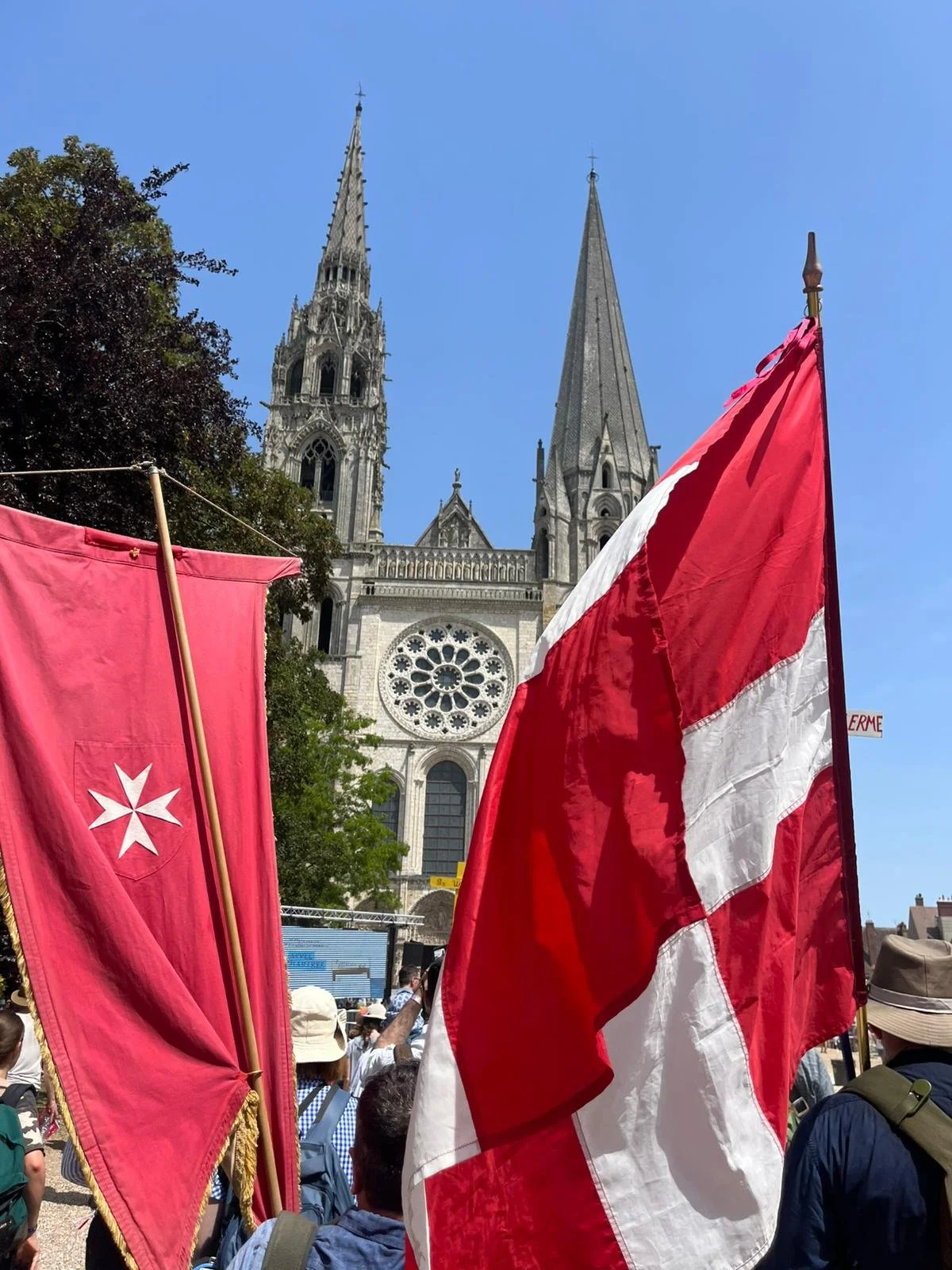
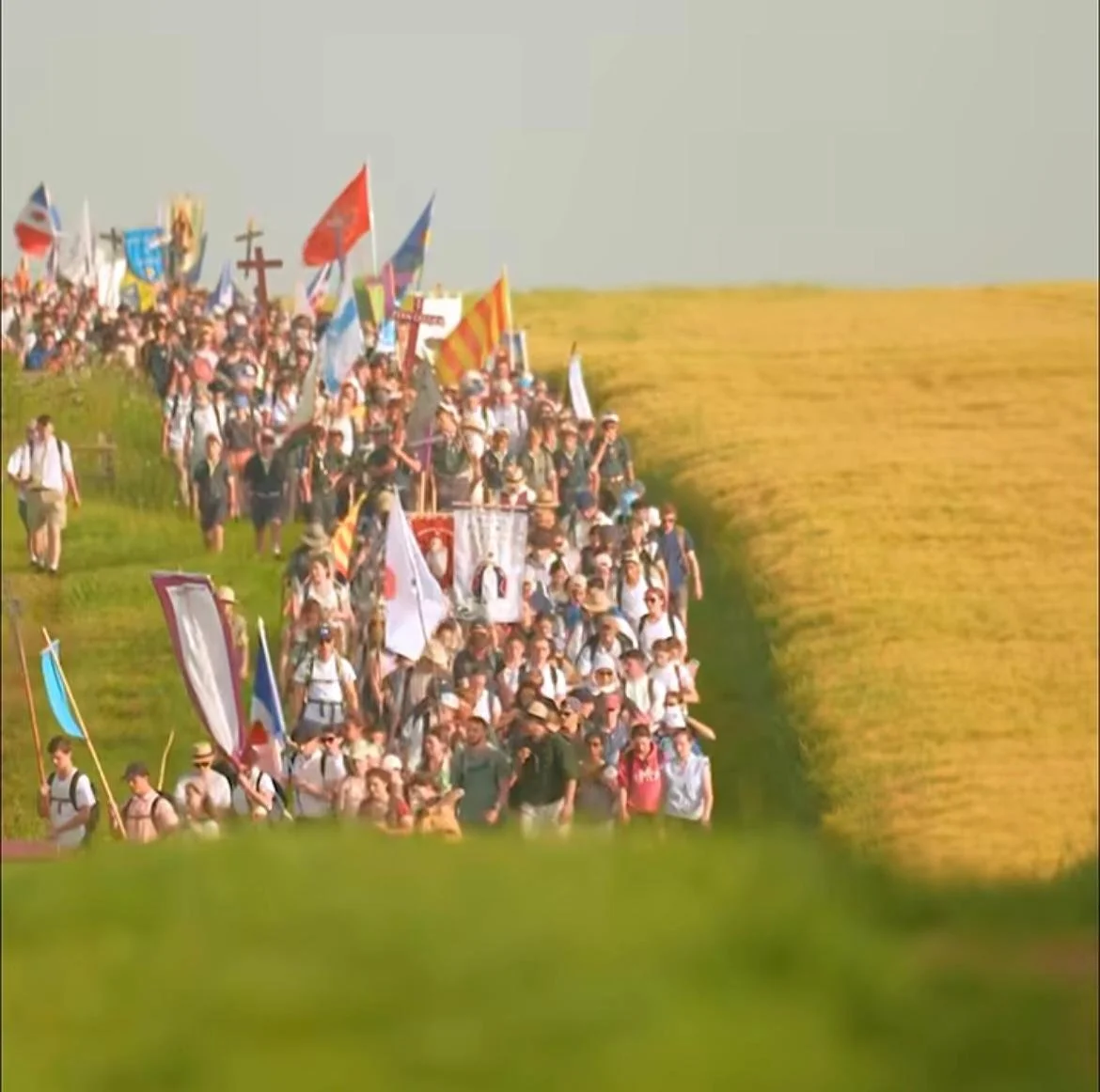
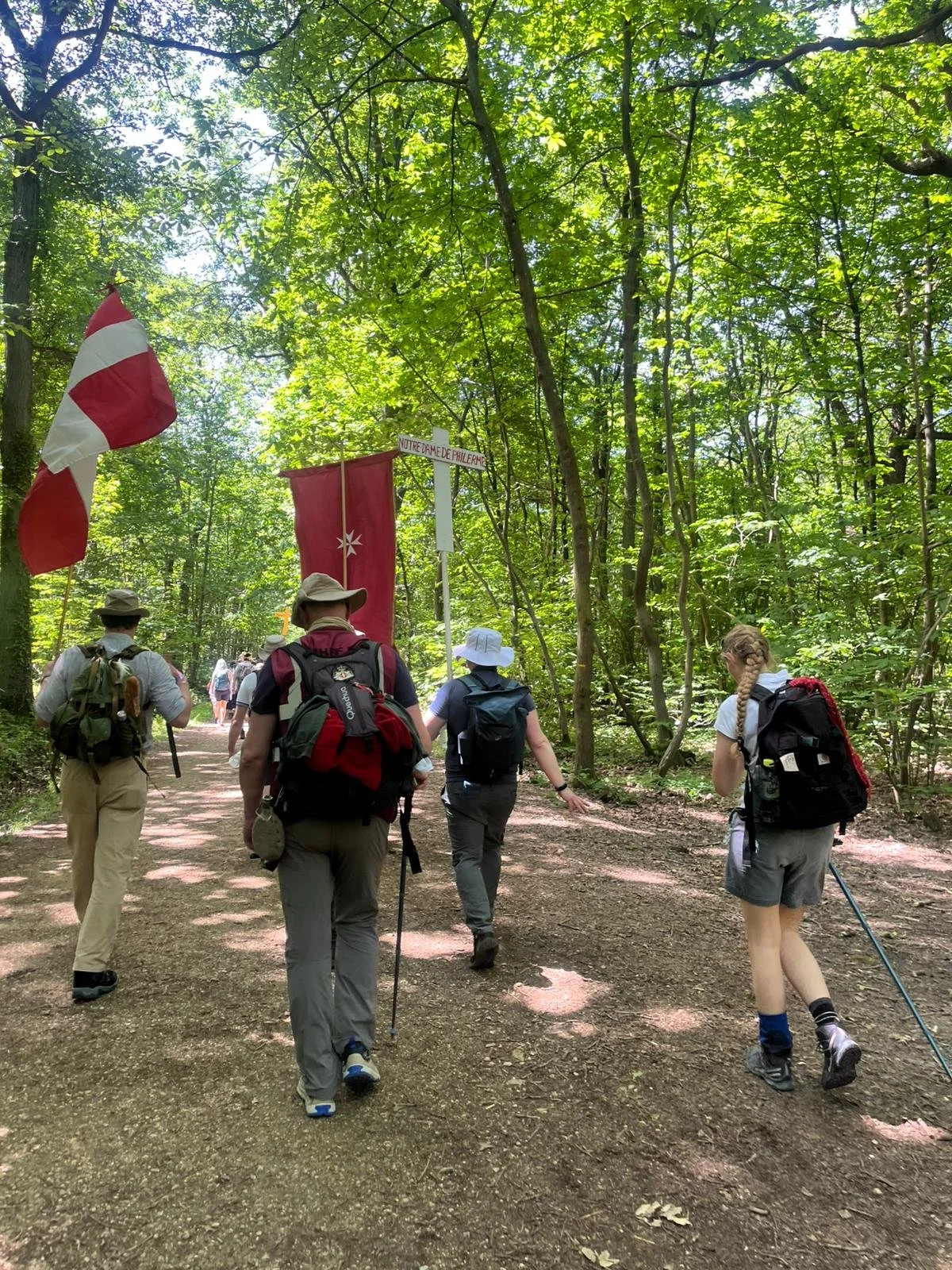
This is the season of pilgrimages. A few weeks ago the Order worldwide went to Lourdes for a week; on Pentecost weekend, a group of British members of the Order walked 90kms from Paris to Chartres with their French confrères; this last week I was in Normandy, and was able to see from the cliffs the stream of pilgrims walking “across the sea” from Genêts to Mont-Saint-Michel.
What is a pilgrimage?
Our Order was built on the pilgrimage to Jerusalem - this spiritual act is bedded in the very marrow of knights and dames. Each year, British members of the Order make several pilgrimages, which are sometime well-trodden routes, sometime unknown to all but a few to whom a certain devotion has a meaning. We can think of the pilgrimage to Walsingham, one of the oldest Marian pilgrim sites in Europe, founded a century before the foundation of our Order, a route trodden by countless kings and and nobles alongside tens of thousands of poor people. Then there is Canterbury, where we venerate St Thomas à Becket, martyred for defending the Church against a tyrant king. At Holywell in Wales we pray to St Winifred, who defended her purity against a lustful suitor in the 7th century - this pilgrimage has never stopped, again many kings have visited, even protestant kings after the Reformation. And Aylesford is also a destination of pilgrimage, where in the 15th century Our Lady gave the brown scapular to St Simon Stock, a Carmelite whose order has Crusader links to our own.
Then there are sites closer to our own time and our Order: Tyburn, where daily one can see pilgrims kissing the site of the gallows on which so many Catholic martyrs died, now amidst the rage of traffic; Tower Hill, where our own patron Blessed Adrian Fortescue and Sir Thomas Dingley met their martyrdom; and St Thomas Waterings in Southwark, where each year members of the Order walk to honour Blessed David Gunson, a martyr knight from Malta, who also suffered to defend the Faith against a tyrant king.
One discerns a pattern in these holy devotions - in some we share the concerns of the times in which Our Lady came to offer encouragement and comfort in our earthy strife, concerns which are natural to the human condition, and barely change from age to age; and in others we honour those who have given their lives for the Truth, and to fight injustice, and give us, God willing, courage to fight these same battles in our own lives.
Why do we go?
But why do we travel to these sites, often on foot, often with considerable hardship, far from the comforts of our own homes? Why can we not simply pray in church, or by our fireside?
A pilgrimage is a mirror of our spiritual life, which accompanies our bodily life day to day whether we notice it or not, from our birth to our last hour, when we shall be judged. When we make these journeys we bring to mind all the ways in which we are weak, and fail over and over again. Removed from the daily distractions which constantly seek to push us off the right path, we offer them to Christ and to a saint to accompany us on our journey, to share our burden, to take our feeble petitions to the Throne of Grace.
Very often, of course, our pilgrimage is accompanied by many moments of worldly pleasure - the joy of meeting up with old friends, late evenings in the bar with rather more than we might usually drink, songs which can get very jolly, far removed from the dignity of our professional lives. There is the fun of travel often to beautiful places. This is all part of pilgrimage; and very Catholic - so we learned long ago from Geoffrey Chaucer! We do not stop being human when we set off in our heavy boots and those funny clothes we only wear once a year. But we should see these diversions as we might receive the Sundays of Gaudete and Laetare in Advent and Lent, little pauses of comfort on an arduous journey. These pleasant things are not the pilgrimage. A pilgrimage, however jolly, is not a holiday, be it an outdoor trek or a reunion of friends; our daily routine on pilgrimage must involve a far more rigorous attention to prayer and the sacraments than in our everyday existence. These are opportunities given to us by God to come close to Him in a few short hours or days, and well-used we receive graces which are felt tangibly, and put a spring in our step for many weeks afterwards.
But equally one must avoid overdoing it in a false piety; one is reminded of the answer someone gave to a dame of the Order who has asked if he had had a good time in Lourdes “I don’t go to Lourdes to have fun.” Well, really, there’s no point going if you feel like that!
One could say there are two sorts of pilgrimage, those where one goes alone with one’s intention of prayer, and those where one takes one’s intentions along - our Lords the Sick. Both are equally valid, and have the same goal. The graces we receive personally come through our virtuous acts. High among those acts is caring for and praying for the sick, the poor, the aged, those who accompany us and those at home. We also perform a worthy act in gaining Indulgences which may be applied to our deceased family and friends, according to the many generous provisions made by Holy Mother Church. Through all these we build up our own souls. We must bear in mind too that while we care for the often very necessary bodily comforts of the Seigneurs Malades, our primary duty is to pray for their eternal wellbeing, or it is just sentimental philanthropy – there is little point in healing their bodies while neglecting their salvation, we wish to meet them again happily in Heaven, as St Thomas More said.
This essential spiritual dimension is made very clear by the practice in the Middle Ages of imposing pilgrimage as penance for sins committed, often accomplished at enormous hardship and inconvenience. Rich and poor would often travel by foot for months. The Popes imposed the pilgrimage to Jerusalem upon kings and great nobles, and among the fruits of this was the success of the Crusades. Within our Order St Gerlach of Houtem was sent by Pope Honorius II to Jerusalem for seven years, which brought about the most wonderful conversion of life. What may at first glance seem harsh can bring great fruits.
How should we start?
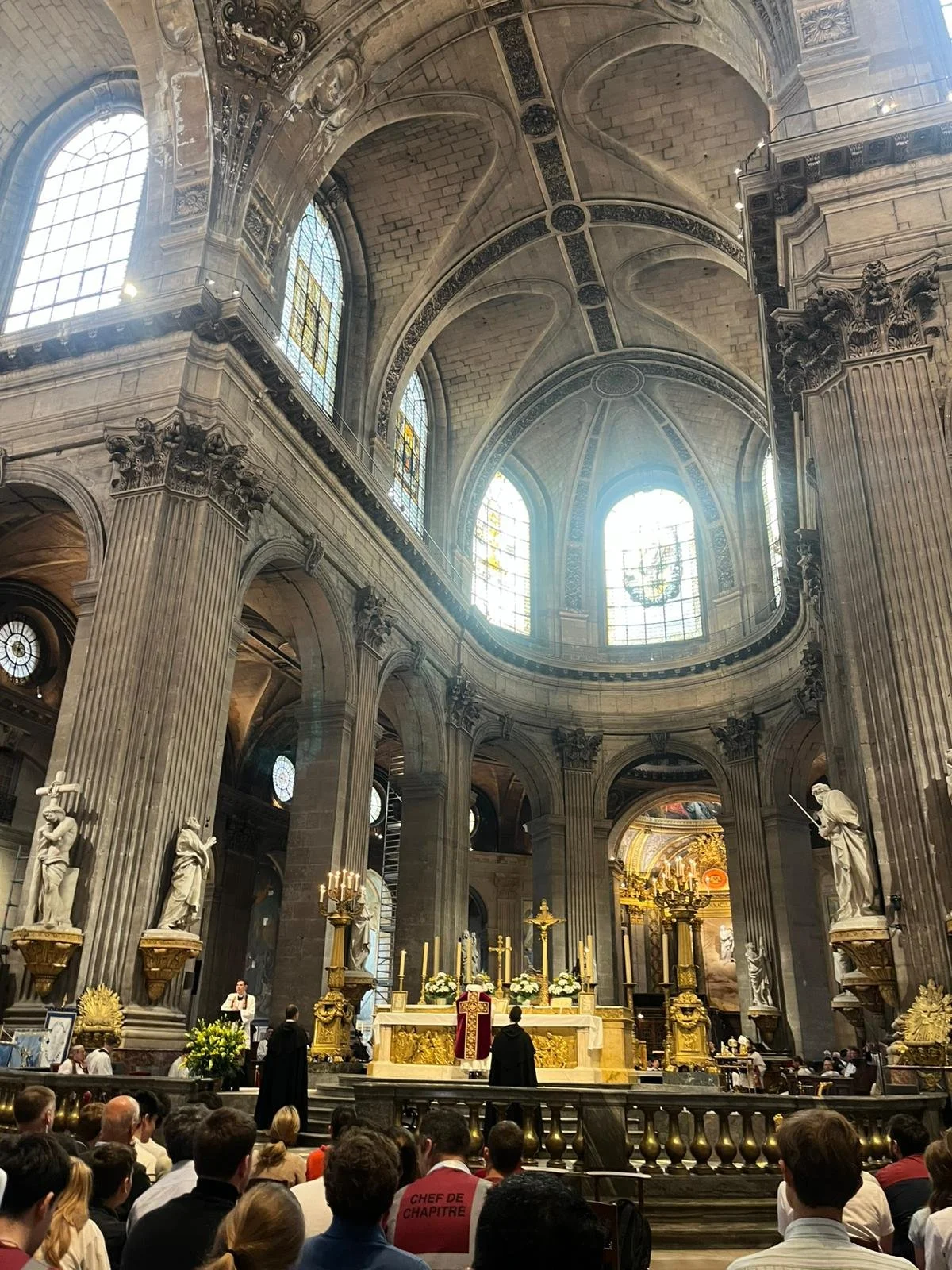
So how should we approach it? First of all, the pilgrimage starts several days before one sets off. We are all very happy to set aside a few evenings to get our kit ready – sewing, polishing, shopping, cooking. But – I say again – it’s not a holiday or an army exercise. Do we also spend time preparing spiritually? Perhaps a novena, even if only an extra Hail Mary at bedtime; or reading up about the devotion. Before we leave we should make sure to make a good confession and go to Mass - we cannot receive all the spiritual benefits available if we are not in a state of grace; if we leave this till the end we’re just wasting the valuable time God gives us. Then the day we set off it is a good idea to say some of the ancient prayers the Church offers us for the departure on pilgrimage called the “Itinerarium”; they mark the beginning of the journey, the soul puts on its spiritual clothing. These can be found in many missals and books of prayers. It is a great shame that in recent years these prayers are so often omitted; you might encourage the priest leading the pilgrimage to say them as a group and bless you with holy water.
Then, depending on the type of pilgrimage, every day we should make an effort to say some of the daily prayer of the Church, ideally together – the Breviary, or the Liturgy of the Hours. People often think it is somehow silly to do this if one does not pray in this way through the year, but on the contrary, it is a great tool to help us grow our spiritual muscles, and is the prayer of all the faithful. It is also important as it unites us in our prayer to the whole of the Pilgrim Church – a problem shared is a problem halved. Then finally, and most importantly, we should make use of the sacraments of Confession and Holy Communion while we are there; without confession of our sins our pilgrimage will have been wasted if we retain sinful matter on our conscience, however many good works we may have done. A pilgrimage is the most wonderful opportunity for those who have not confessed for a long time to begin again. The saint we are honouring will accompany and guide us to truly discern the state of our soul and unburden us of all the things which weigh us down.
Then the prayers the saint has offered at our request will truly have been effective; and we’ll be ready and stronger for the next time – and one day reach a higher place in Heaven.