
The Entry into Jerusalem - a Lenten Journey, Part 6
This Holy Week, we share the sixth and final stage of our Lenten journey with Our Lord towards His Passion, as told by St Luke. We meditate on Luke 19:28-44, the triumphal entry into Jerusalem which we marked on Palm Sunday. Next week, Fr Gwilym will return with a brief Easter postlude, as our journey continues beyond Jerusalem.
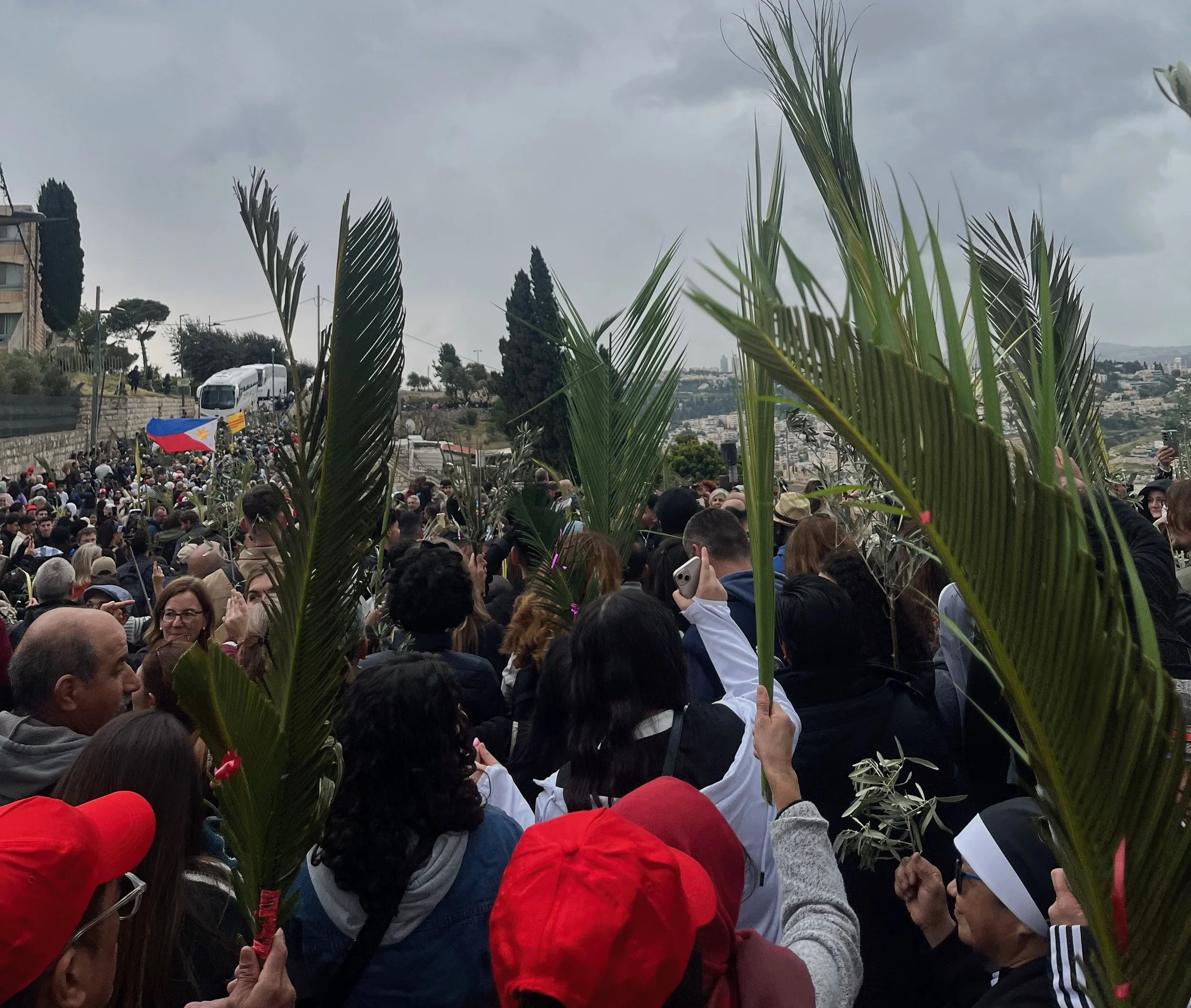
Palm Sunday procession in Jerusalem 2025 (Fr Gwilym Evans FSSP)
“Would that you, even you, had known on this day the things that make for peace!” (Lk 19:42)
Six weeks ago, we set our faces with Christ toward Jerusalem (9:51). We have walked with Him through the parables of the road, girded our loins, and striven through the narrow door. Now, ten chapters later, we make the final ascent — over a thousand metres from the depths of Jericho to the city of destiny. From the brow of the Mount of Olives, the Holy City lies before us. Yet St Luke presents this arrival not as a simple conclusion, but as a moment of profound tension: the King enters His city and weeps over it.
The scene is at once triumphant and tragic. The “whole multitude of his disciples” (19:37) acclaims Him with the Passover psalm: “Blessed is [the King] who comes in the name of the Lord” (Ps 118[117]:26) — words echoed at every Mass, at the threshold of the consecration, as the Lord comes again. In Luke’s account, there are no palms or branches; the crowd offers something more intimate, laying down their own cloaks (19:36), the ancient sign of royal coronation (2 Kgs 9:13). Christ enters as King, yet in a counter-triumph: not on a warhorse, but on a borrowed colt; not in power, but in humility (cf. Zech 9:9).
Entering from the east via Bethphage—where, by Rabbinic tradition, the Temple’s bread first became ritually valid—the city’s own liturgical geography reveals the meaning of this procession. He comes not to observe the Passover, but to be it: Priest and Victim, Bread and Sacrifice. Yet the same “whole multitude” will soon lead Him to Pilate to accuse Him of the very kingship they now acclaim (23:1). In this shifting crowd, we recognize ourselves: capable of both coronation and crucifixion.
Abruptly, the tone changes: a dramatic reversal; a Sophoclean moment of peripeteia. The acclaimed King begins to weep (19:41). In another detail unique to Luke, Jesus laments over Jerusalem—the city whose name was often interpreted as ‘city of peace’ (Ir Shalom)—because she does not recognize “the things that make for peace” (19:42). At His birth, angels sang “peace on earth” (2:14); now, at the threshold of His Passion, the multitude proclaims “peace in heaven” (19:38). Peace is hidden from the earth, because the Prince of Peace has been refused.
Writing from Jerusalem today, one cannot help but feel the enduring weight of this lamentation. In a city still marked by conflict between two sides that do not know Him, Christ remains the unrecognized source of peace. Yet the Gospel does not leave us in despair. Jesus’ tears are not of helplessness, but of a love that seeks to pass through the sacrifice of the Passover into the glory of the Resurrection.
What, then, is asked of us? “The Lord has need of it” (19:34). The One Who has need of nothing chooses, in His condescension, to have ‘need’ of a creature. In the same way, He wills to have need of us — that we might carry Him into the world. For members of the Order, to welcome Christ the King is to recognize Him where He has chosen to dwell: in the poor, the sick, the suffering. But also—more deeply still—in the mystery of His hidden presence (latens Deitas) in the Holy Eucharist. The “things that make for peace” are not absent, but hidden and unseen. To defend the faith (tuitio fidei) is to learn to recognize Him: hidden, yet truly present — and to follow Him beyond Jerusalem and into the light of Easter, where He gives Himself to us in the Sacrament of Peace.
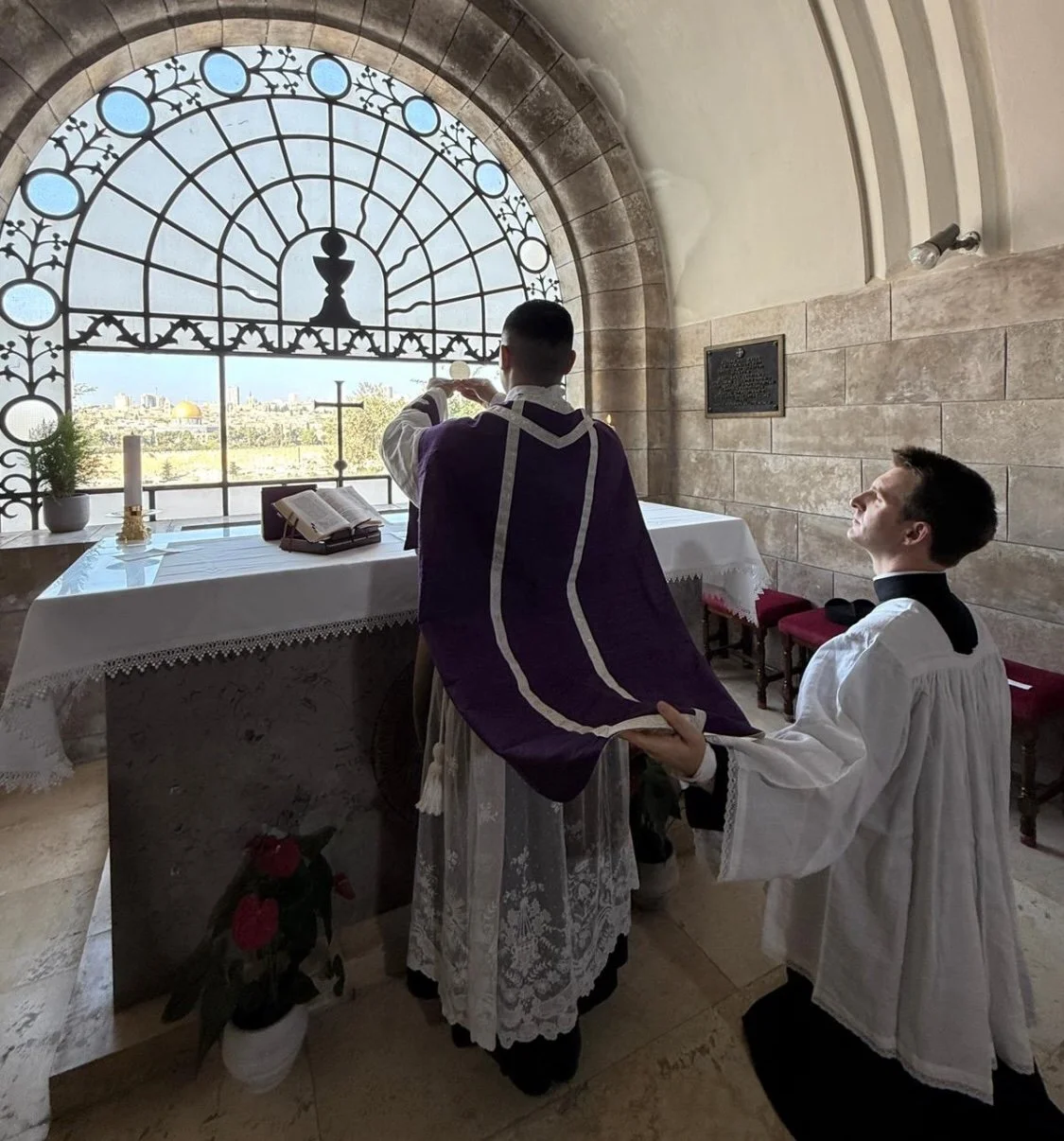
“And I, when I am lifted up from the earth, will draw all people to myself.” (Jn 12:32) Holy Mass celebrated at Dominus Flevit, the church on the Mount of Olives that commemorates Our Lord’s weeping over Jerusalem (Fr Gwilym Evans FSSP))