
The road to Emmaus
Christ is risen! — “The Lord has risen indeed” (Lk 24:34). This Easter Monday, Fr Gwilym Evans FSSP offers a “postlude” to our Lenten journey through the Gospel of St Luke with a meditation on Luke 24:13-35, having himself just returned from a walk to Emmaus.
We are immensely grateful to Father Evans for his meditations throughout Lent, sent to us from the Holy Land, amidst all the trials of this present time. Please keep him and all those living in the Holy Land in your prayers.
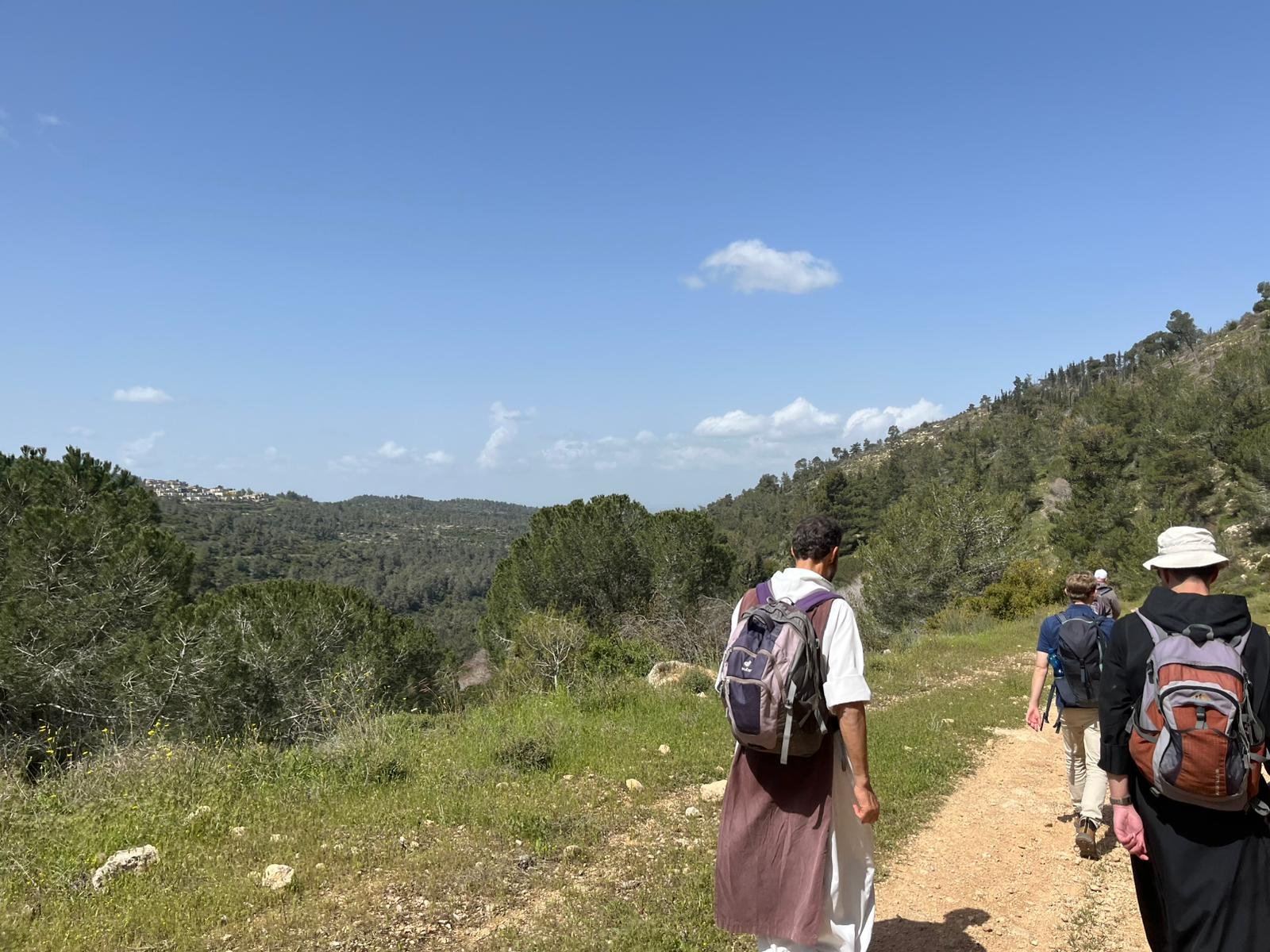
Walking the road to Emmaus on Easter Monday morning 2026 (Fr Gwilym Evans FSSP)
“Was not our heart burning within us, whilst he spoke to us on the way and opened to us the scriptures?” (Lk 24:32)
Our Lenten journey ended last week, yet our pilgrimage does not end at the empty tomb. If Lent was the journey to Jerusalem, Easter is the journey from it. St Luke concludes his Gospel not with a stationary triumph, but with a movement: the first steps of that new Christian movement which his sequel, the Acts of the Apostles, will call simply “the Way” (Acts 9:2; 19:9, 23; etc.). The disciple is always a pilgrim: journeying to Jerusalem, from Jerusalem, and ultimately toward the heavenly Jerusalem.
The Road to Emmaus is the crowning scene of Luke’s narrative — and a magnificent inversion of classical tragedy. As we’ve seen, his Gospel is marked by reversals, and here comes the greatest of them all. The literary device of anagnorisis—the moment of recognition that, in ancient drama, precipitates downfall (Oedipus on the road to Thebes being the textbook example)—is here reversed. Recognition brings not catastrophe, but joy: “sad” (‘gloomy-faced’ more literally — or ‘sullen’, as in Mt 6:16) faces (24:17) transfigured into “burning” hearts.
The Risen Lord walks with them as the new Moses—“a prophet mighty in deed and word” (24:19; cf. Acts 7:22; Dt 34:10-12)—leading a new Exodus after a new Passover, interpreting the Jewish law and prophets in the light of Easter. Anyone who assisted at the Easter Vigil should recognize the ‘Emmaus pattern’: a long walk through the Old Testament before encountering Our Lord in the “breaking of the bread” (24:35).
Easter reverses Eden: Adam’s catastrophe is turned into joy (O felix culpa!). The eyes of our first parents were “opened” (Gen 3:7) after they had eaten the forbidden fruit, but to shame and nakedness. At Emmaus, the pattern is inverted. As Jesus takes, blesses, breaks and gives the bread—the unmistakable language of the Last Supper (22:19)—the ancient curse is undone: “And their eyes were opened, and they knew him” (24:31). Where the first eating opened the eyes to alienation, this eating opens them to communion.
Few have captured this ‘transubstantiation of the heart’ like Caravaggio (briefly a Knight of Obedience in the Order of Malta!). In his (first) Supper at Emmaus, a beardless Christ suggests the eternal youth of the Resurrection; a basket of fruit teeters on the edge of the table, its shadow in the shape of a fish (the early Christian symbol of Jesus Christ, Son of God, Saviour — spelling out in Greek IChThYS, the word for ‘fish’), visible to the keen observer also in the broken wicker. The disciples’ gestures re-enact the Paschal mystery: one stretched outward as if crucified, the other rising as if into new life. They act out the mystery they have just recognized.
For members of the Order, Emmaus is not merely a story, but a rule of life. The Christ whom we encounter in the Scriptures and recognize in the “breaking of the bread”—the early Church’s term for Holy Mass—is the same Lord who comes to us in Our Lords the Poor and the Sick (Catechism 1373, 1397).
The altar and the soup-kitchen belong together:
To nourish the faith (tuitio fidei) is to recognize Him in the Holy Eucharist.
To attend to the poor (obsequium pauperum) is to host Him at our table.
In both, the same prayer must rise from our hearts: Mane nobiscum — “Stay with us” (Lk 24:29) — “Abide with me.”
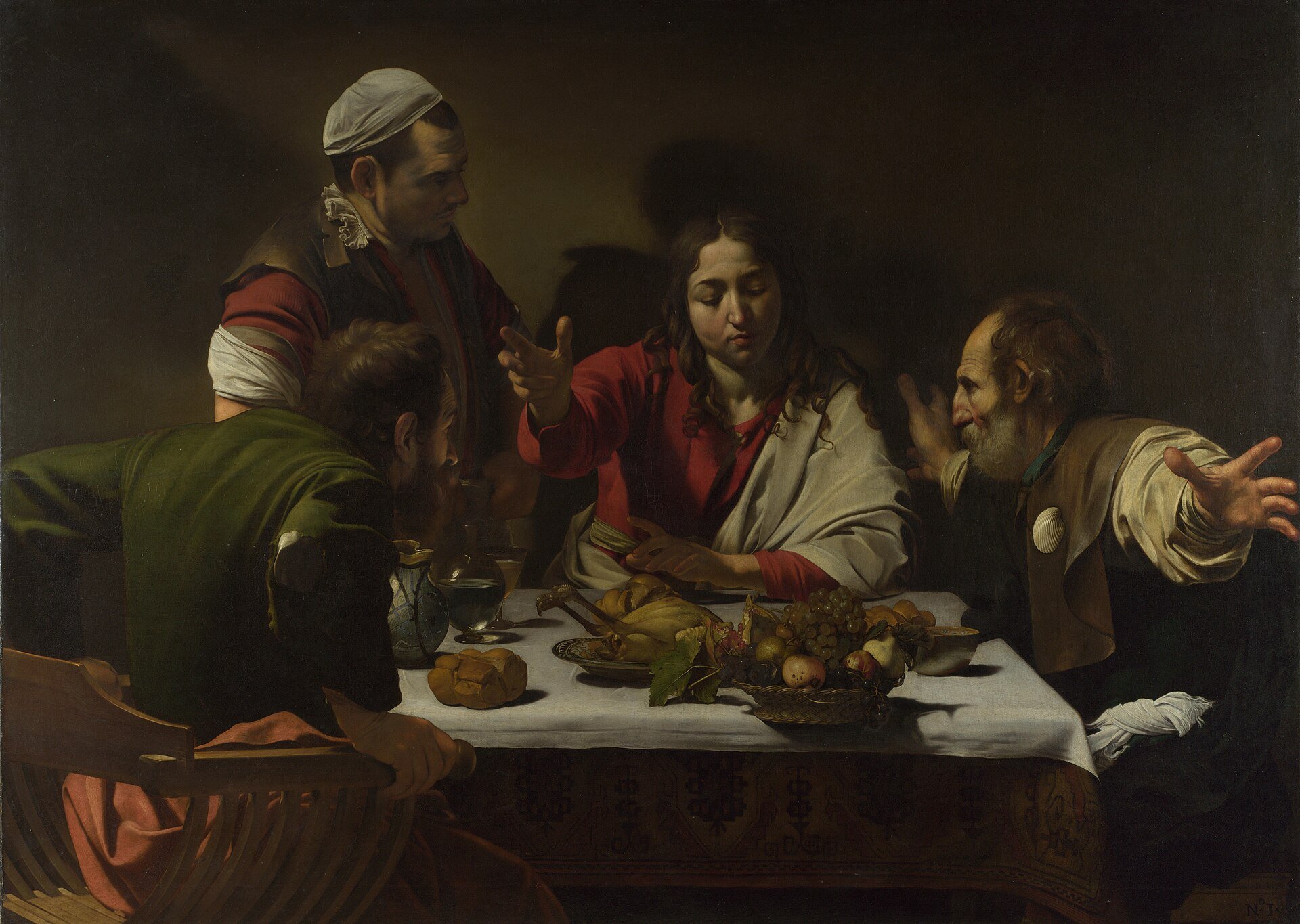
Michelangelo Merisi da Caravaggio, The Supper at Emmaus, 1601, oil on canvas. National Gallery, London.