
Ready for service - a Lenten Journey, Part 4
Writing from Jerusalem, Fr Gwilym Evans FSSP continues our Lenten reflections on St Luke’s Gospel, turning this week to Luke 12:35-40.
A reminder that the March Conventual Mass will be celebrated on St Patrick’s Day, Tuesday 17th, at Warwick Street, at 6:30pm.
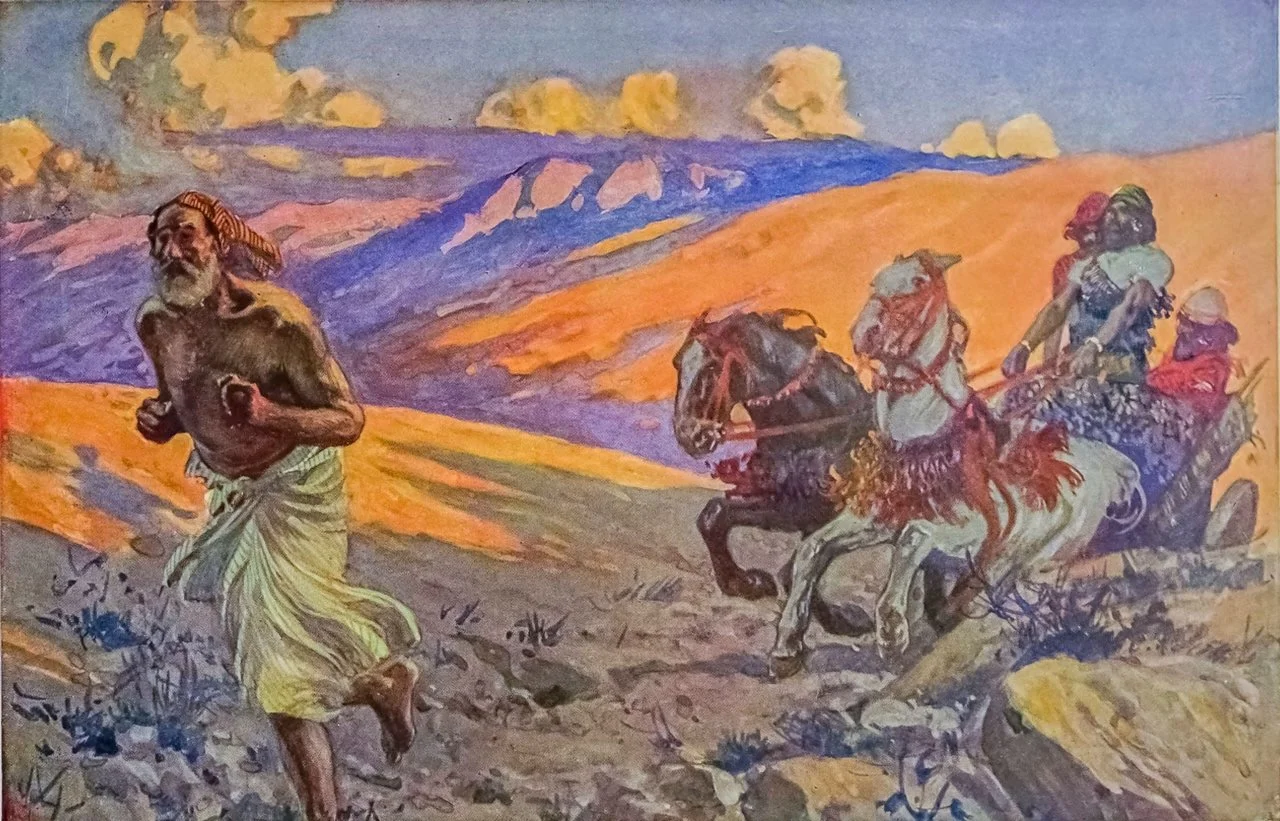
“And the hand of the Lord was on Elijah; and he girded up his loins and ran before Ahab to the entrance of Jezreel.” (1 Kings 18:46) James Tissot, plate in The Old Testament: Three Hundred and Ninety-Six Compositions Illustrating the Old Testament, Part II (Paris: M. de Brunoff, 1904)
“Let your loins be girded and your lamps burning.” (Lk 12:35)
As we progress on our pilgrimage to Jerusalem, chapter 12 of St Luke’s Gospel offers something like a map of the cardinal virtues: ‘rules of discipleship’ for the road. Having dealt first with temperance (12:13-34), Jesus will lead us toward fortitude (12:49-56) and justice (12:57-59). Between these, however, stands the virtue that St Thomas Aquinas calls the auriga virtutum, the “charioteer of the virtues”: prudence. For the Christian pilgrim, prudence takes the form of vigilance.
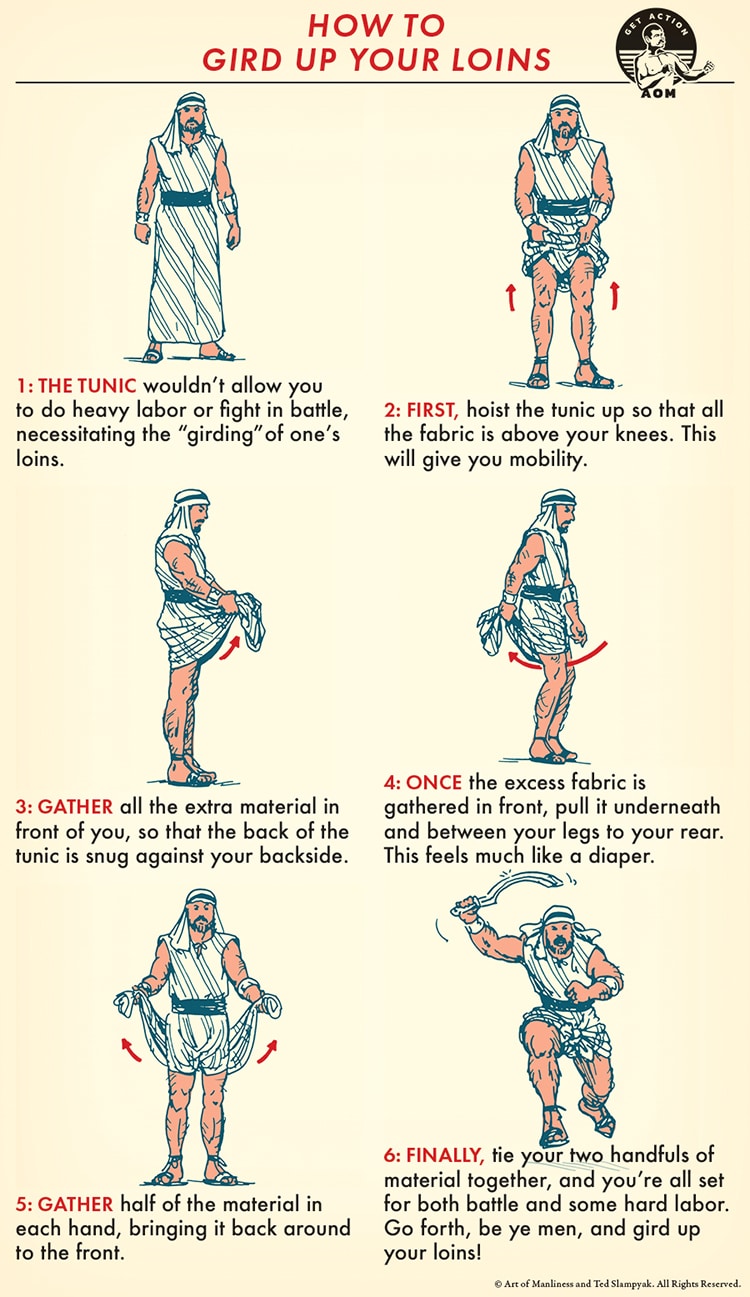
Our Lord expresses this vigilance through a single vivid gesture: the girded loin. In the ancient world, tucking one’s long tunic—think of a priest’s cassock or a knight’s habit—into a belt was the universal posture of readiness for hard work or swift action. Today we might say:“roll up your sleeves”; “put your aprons on”; or “on your marks”!
For Luke’s readers, however, this Old Testament idiom would immediately evoke the Passover, when Israel ate the paschal lamb with loins girded (Ex 12:11), poised for God’s decisive intervention. Luke has already hinted at this at the Transfiguration (9:31), where Jesus’ approaching “departure” is described with the very word exodus. His journey to Jerusalem is a New Exodus: a Passover journey to a Passover sacrifice. And so His disciples must be dressed accordingly.
The full depth of this image appears in what follows. In another characteristic ‘Lucan reversal’, the returning master does not sit down to be served; he girds himself and waits upon his servants (12:37). Luke is already pointing us toward the Last Supper, where Jesus will be “among you as the one who serves” (22:27) and—in John’s Gospel—is ‘girded’ with a towel at the foot-washing (Jn 13:4).
Then, through the lens of Christian iconography, the image opens onto the Cross itself. The loincloth of the Crucified Christ (venerated at Aachen) is known as the perizoma, a word derived from that same Passover dress-code: ‘to be girded’. For Greek-speaking Jews, though, perizoma was also the word used for the fig-leaf aprons with which Adam and Eve covered themselves in shame (Gen 3:7). As the Church Fathers saw it, the fig-leaf of the Fall becomes the fig-leaf of Redemption.
So, to be girded is to be conformed to Christ: ready for service and for sacrifice. But vigilance is not only outward. We are told too to keep our “lamps burning”: a watchfulness of the heart. Lent is the privileged season for this inner vigilance, as we take account of our sinfulness. Many of us need to kindle (or rekindle) the habit of the daily examination of conscience, holding up our lives to the light of Christ to see what still darkens our path.
Here again, the Gospel speaks directly to the charism of the Order. If our loins are girded to serve the poor, our lamps must burn to defend the faith. Vigilant in both, we follow Christ toward the heavenly Jerusalem: ready in charity, steadfast in faith, and watchful for the coming of the Lord.
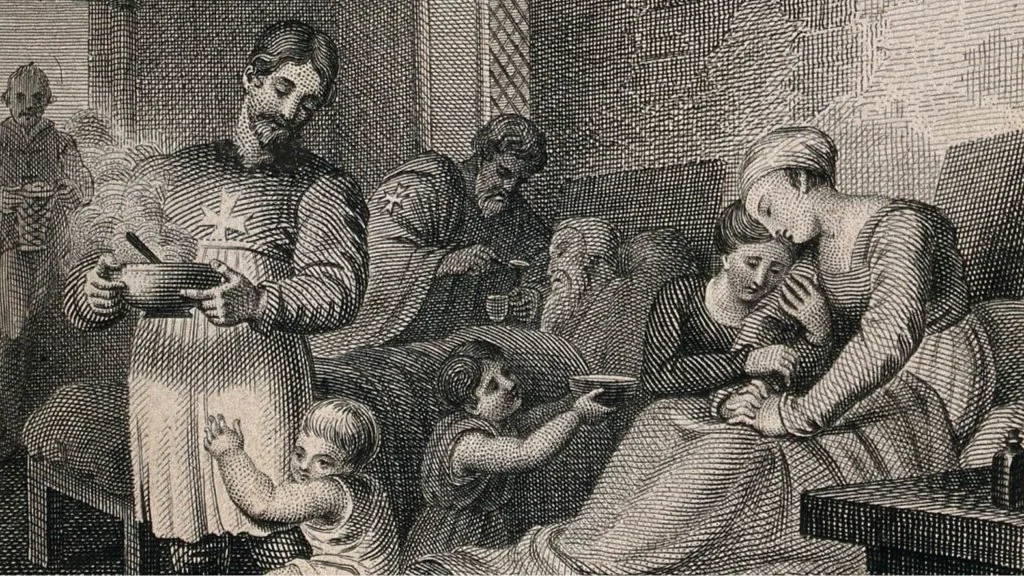
Hospitaller Knight, girded with apron, serving the poor (19th-century engraving)