
What is a ‘Donat’?
The ‘Donat’ is a category of membership in our Order of Saint John. As with so much else, over the course of the Order’s 900 years of history the term has been used in various away to mean different things.
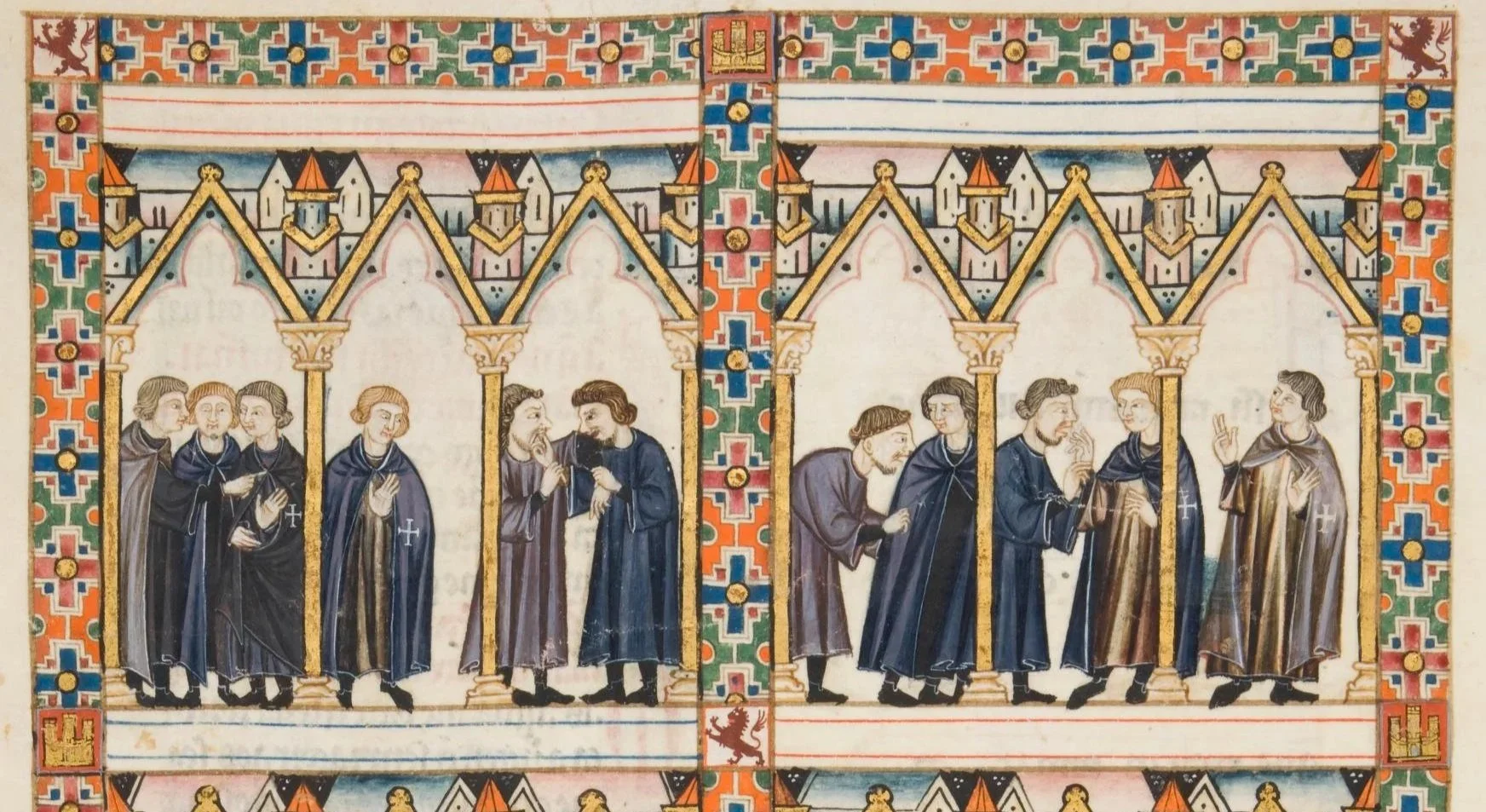
The term originally came into use in the 13th century, to supersede the term ‘confratres’, a word shared with many religious orders. The confrater is one who was “with the Brethren” (“con” and “frater”) but not of them. They are also occasionally referred to a “serving brothers”, though this description overlapped with the esquires of the knightly full members of the Order.
These Donats were both men and women, who were not of noble rank and thus ineligible for membership of the Order, and did not take vows. It had begun as an honour, as its name suggests, used to reward those who had given some significant service or benefaction to the Order. While some would have gone to Rhodes, they were present also in the commanderies at home. It should be stressed that they were very few in number : for example, in 1338, a period of great constitutional reform during the priorate of Fra’ Philip de Thame, there were 34 professed knights in England and Wales, 36 chaplains, and 48 sergeants. There were however only three Donats! At the same period there were about 500 other adherent to the commanderies, made up of corrodaries (effectively lay lodgers in the houses, who paid to live and share the religious and community life), clerks, squires, secular chaplains and servants.
Let us take a step back and look at the Order proper, (we shall ignore the professed Ladies, whose structure was somewhat different). The Order was, in the early days, made up of three classes. The knights, who were both in noble grades and took the three religious vows of Poverty, Chastity and Obedience, called “of Justice”. Then there were the Conventual Chaplains, who came from decent families, while not necessarily noble, and who were also made vows. Finally, the third class was Sergeants-at-Arms. There were full members of the Order, from non-noble families, who also made vows and so were full religious. Their function was one of military service and administration, such as the running of preceptories as local superior, which they could do in the absence of a knight.
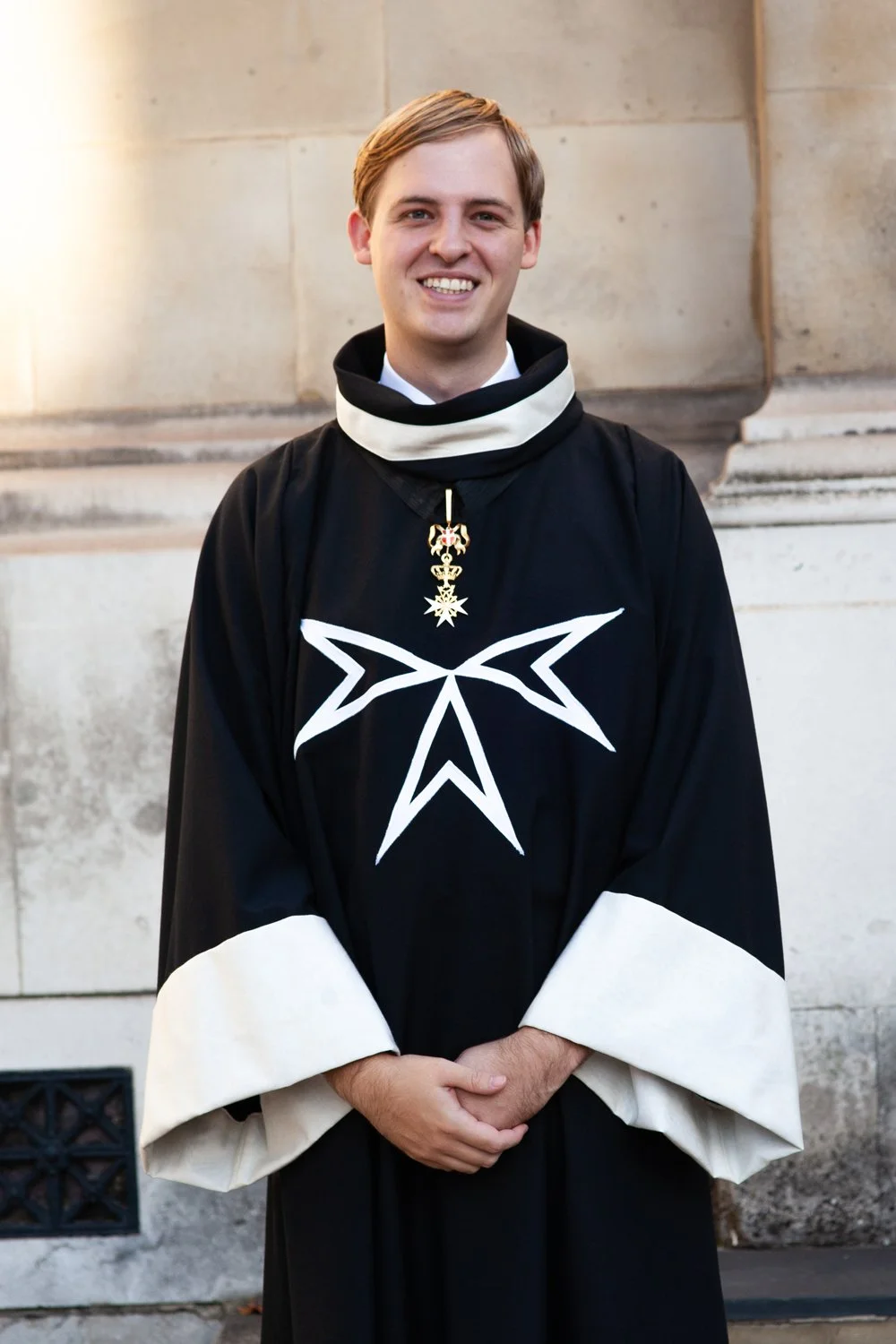
From the very early days the Sergeants wore the ‘half-cross’, with the top arm missing, and this usage was accorded also to the non-professed Donats. What is the origin of this Cross?
Legend has it that the three-armed cross originated during a battle, variously placed in the Holy Land or later at Rhodes; a sergeant or donat fought with exceptional bravery, and The Grand Master, lacking time or ceremony on the battlefield, tore off the upper arm of his own cross leaving a three-armed cross, which he granted as an immediate mark of honour, This remains the emblem worn thereafter by all non-knightly brethren distinguished for their valour or service.
This tale of origin from the battlefield appears only in late historical and antiquarian literature, the earliest reference in the 16th century, and has no basis in the statutes or contemporary medieval accounts.
Later writers attached symbolism to it; that it presented Christ’s wounds; his virtues in the Temptations in the wilderness; His vows; and the three-fold Church. However it is understood, their cross was not lesser by shame, but different by vocation, representing Honour without elevation to knighthood, and Courage without noble birth.
It should be remembered that in the early days people joined the Order in their teens, nobles as esquires, and as sergeants, some joined even in their minority, as young as 6 or 7 years old, and grew in their service until knighted in their early twenties. Donats may well have joined later as grown men, having given service to the Order as non-members. As time wore on the Donats appear to have grown in number and become interchangeable with the Sergeants-at-arms.
After the disruptions of the loss of Malta, the structures of the Order changed greatly, knights no longer had a military life; for many it changed from a life of active service to an honour and social distinction. The membership, now made up mostly of knights not in religious vows, (what we now the 3rd Class), was classified in the statutes into a hierarchy of social structure, in a much more formalized way that has been seen before.
Somehow the rank of Donat, from being an honour itself, changed to being the lowest “grade”, probably because it was at the bottom of the list. The grade of Sergeant had disappeared, so Donat filled the void of non-nobles but not in vows, along with the greatly expanded grade of Magistral Grace, which had been a very rare distinction in Malta (Caravaggio was made one). It should be remembered, though, that as women as well as men were eligible as Donats from early days, it was never a route into knighthood, as it has become recently.
In the Code and Constitution of 1961 and 1969, which followed the creation by decree of the Pope of the rank of Knights of Obedience, who initially were restricted to nobles, the grade of “Donat of Justice” was invented for non-nobles, a real anomaly, as the word Justice had, as it has again now, always be reserved to those who made made the triple religious vows.
The Constitution and Code of 1997 removed this rank, and its holders entered immediately “Magistral Grace in Obedience”. There is one knight living today in the English Priory who originally started out as a Donat of Justice. The new rules introduced “Donats of Devotion” as the most junior rank for young members, this was also without any historical precedent. The title remains somewhat anomalous, as Devotion has for a long time signified noble status: the Mediterranean mind seemingly finds it difficult to cope with a one-word title!
At the present time, many new members of the Order in Great Britain enter the Order as a Donat before, after some time praying and working as a member, being promoted in the main grades of membership as a Knight or Dame of the Third Class.
The Donat of today is however, compared to his mediaeval predecessor, just a hollow name, and has nothing whatever to do with the Donats of the Crusader years, but when correctly applied still requires, to quote the Code of 1997 “special merits in the service of the Order’s own Works.” Yet we must never overlook their great contribution to the works of the Order, however it is framed, then as now!